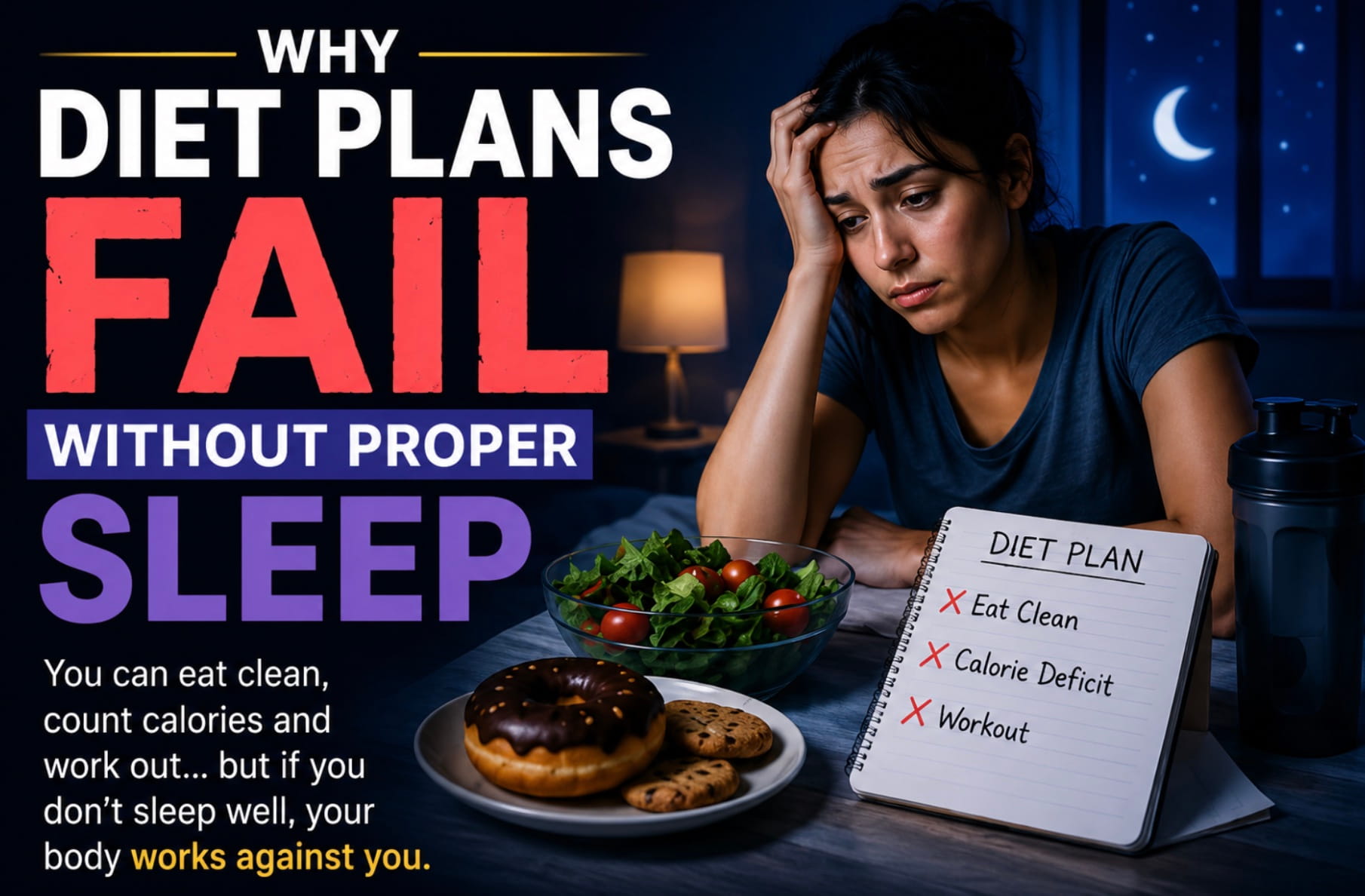
Why Diet Plans Fail Without Proper Sleep
Many people focus intensely on diet and exercise when trying to lose weight, improve their health, or achieve fitness goals. They carefully count calories, follow meal plans, and spend hours at the gym. Yet despite their efforts, they often struggle to see lasting results.
One of the most overlooked reasons behind this is poor sleep.
Sleep is not just a period of rest—it’s a critical pillar of health that directly impacts metabolism, appetite, energy levels, and overall well-being. Without proper sleep, even the best diet plan can become difficult to follow and less effective.
The Connection Between Sleep and Weight Management
Your body performs essential recovery and regulatory functions while you sleep. During this time, hormones responsible for hunger, fullness, metabolism, and stress are balanced.
When sleep is inadequate, these systems become disrupted, making it harder to maintain healthy eating habits and achieve your health goals.
How Poor Sleep Affects Your Diet Success
1. Increases Hunger Hormones
Lack of sleep increases the production of ghrelin, the hormone that signals hunger, while decreasing leptin, the hormone that tells you when you’re full.
As a result, you may feel hungrier throughout the day and find it more difficult to control portion sizes.
2. Triggers Cravings for Unhealthy Foods
Sleep deprivation often leads to cravings for sugary, salty, and high-calorie foods. The brain seeks quick sources of energy to compensate for fatigue, making processed foods much more tempting.
This can easily derail even the most carefully planned diet.
3. Slows Down Metabolism
Chronic sleep deprivation may affect how efficiently your body uses and stores energy. Poor sleep can reduce insulin sensitivity, making it more challenging for your body to regulate blood sugar levels effectively.
Over time, this can contribute to weight gain and increase the risk of metabolic disorders.
4. Reduces Energy for Physical Activity
When you’re tired, motivation to exercise decreases significantly. You may skip workouts, reduce daily movement, or perform at a lower intensity.
Regular physical activity is a key component of any healthy lifestyle, and poor sleep can interfere with maintaining this habit.
5. Increases Stress Levels
Insufficient sleep raises cortisol levels, commonly known as the stress hormone. Elevated cortisol can contribute to increased appetite, emotional eating, and fat storage, particularly around the abdominal area.
6. Impairs Decision-Making
A tired brain is more likely to make impulsive food choices. Research shows that sleep deprivation can reduce self-control and increase the likelihood of choosing high-calorie foods over healthier alternatives.
Signs That Poor Sleep May Be Affecting Your Progress
- Constant cravings for sweets or junk food
- Difficulty controlling portion sizes
- Feeling tired despite eating well
- Increased hunger throughout the day
- Slow or stalled weight loss
- Frequent late-night snacking
- Mood swings and irritability
Tips for Better Sleep and Better Health
Maintain a Consistent Sleep Schedule
Try to go to bed and wake up at the same time every day, including weekends.
Limit Screen Time Before Bed
The blue light emitted by phones, tablets, and laptops can interfere with your body’s natural sleep cycle.
Avoid Heavy Meals Late at Night
Eating large meals close to bedtime can affect digestion and disrupt sleep quality.
Reduce Caffeine Intake
Avoid caffeine in the late afternoon and evening if you’re sensitive to its effects.
Create a Relaxing Bedtime Routine
Reading, meditation, light stretching, or deep breathing exercises can help prepare your body for restful sleep.
Aim for 7–9 Hours of Quality Sleep
Most adults require 7–9 hours of uninterrupted sleep for optimal health and recovery.
The Bottom Line
A healthy diet and regular exercise are important, but they are only part of the equation. Without adequate sleep, your body’s hunger hormones, metabolism, energy levels, and decision-making abilities can all be negatively affected.
If you’re struggling to lose weight, manage cravings, or maintain a healthy lifestyle, it may be time to look beyond your diet and evaluate your sleep habits as well.
Remember: Better sleep doesn’t just help you feel refreshed—it helps your diet work better too.
Get Personalised Nutrition Guidance
📞 Get Started Today
📧 Contact: [email protected]
🌐 Website: www.aahaarexpert.com
📱 Follow Us On:
Instagram: https://www.instagram.com/dietitian_vinita/
Facebook: https://www.facebook.com/DietitianVinita
Book your consultation today and start building healthy habits that last a lifetime!